Improving site-to-site VPN security and performance for multi-site businesses
-
About
- Type
- Blog
- Categories
- Long readsUpCloud Insights
About
Posted on 26 March 2025
In the interconnected business world, a Virtual Private Network (VPN) is more than just a tool for bypassing geo-restrictions. It’s critical for safeguarding your digital footprint, especially when dealing with sensitive business-critical data.
In the post, we explore what site-to-site VPNs offer for businesses, the best practices for strengthening their security and optimizing its performance for multi-cloud and business applications.
Site-to-site VPN, commonly used by businesses and organizations, enable secure connections between different office locations or cloud environments. However, simply deploying a VPN is not enough. Enhancing its security and performance is essential to safeguard against evolving threats.
At its core, VPN security relies on encryption and secure protocols. Common encryption standards like AES-256 ensure data confidentiality, while protocols like OpenVPN, WireGuard, and IKEv2/IPSec establish the standards for secure connections.

Site-to-site VPNs provide significant benefits, particularly for businesses and organizations with multiple locations or multi-cloud environments:
Secure Inter-office Connectivity: Establishes encrypted links between branch offices and headquarters, reducing reliance on unsecured public networks.
Multi-cloud Integration: Enables secure connections between different cloud providers, facilitating seamless hybrid cloud deployments.
Cost Savings: Eliminates the need for expensive leased lines or dedicated network infrastructure.
Centralized Security Policies: Allows IT teams to enforce consistent security policies across all connected sites.
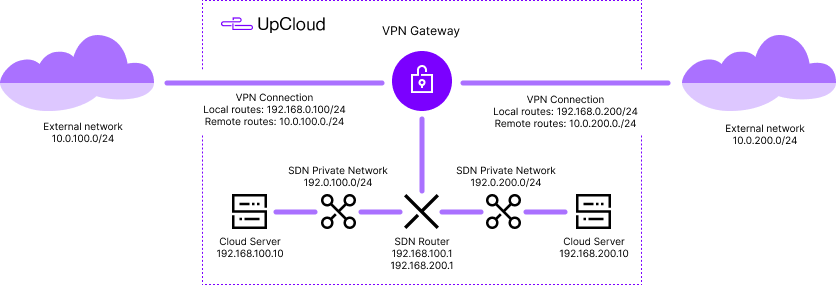
To maximize the security of your VPN, consider implementing the following advanced settings and configurations:
Data integrity ensures that the transmitted data has not been tampered with during transit. Hash functions, such as SHA-2 (SHA-256 or higher), are used to generate a unique “fingerprint” of the data. If the data is modified, the hash value will change, indicating a potential compromise.
Particularly where the business is in control of the networks in all sites, static routing offers an easy and predictable way to configure routing between networks connected using a VPN tunnel. With static routing, site-to-site VPN is configured to route only specific IP subnets ensuring secure connection to company resources without overgrouding the connection.
Implementing multi-factor authentication adds an extra layer of security to your company network. Employees must use two or more verification forms to access their account. MFA is a critical security measure for protecting VPN access by verifying the identity of users attempting to connect. The primary objective of MFA is to provide stronger assurance that the individual accessing the VPN is who they claim to be.
It’s essential to implement regular maintenance and monitoring practices to ensure your VPN remains secure over time. Here are some essential tips:
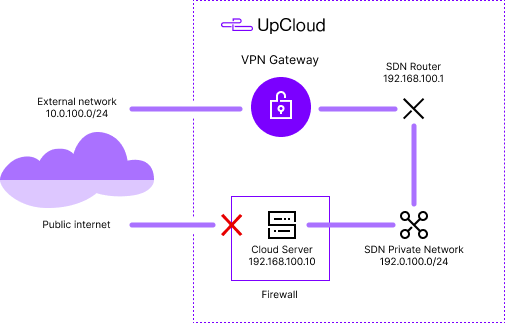
While a VPN is an essential tool for securing your online activity, it works best when used in conjunction with other cybersecurity measures for comprehensive protection. Here are some ways to integrate a VPN with other security tools:
Enhancing your site-to-site VPN security and performance is essential for safeguarding business-critical data and maintaining a secure network environment. By implementing strong encryption, enforcing strict authentication measures, and regularly monitoring traffic, organizations can ensure robust protection against cyber threats.
Integrating your site-to-site VPN with other cybersecurity tools can further strengthen your protection. Staying proactive and continuously updating security configurations will help safeguard sensitive information in an increasingly digital world.