Launching the new and improved UpCloud Managed Object Storage
-
About
- Type
- Blog
- Categories
- AnnouncementsProduct Updates
About
Posted on 22 November 2024
Data security concerns, fluctuating storage demands, and compatibility issues with existing cloud tools are common business struggles. Ensuring your data is protected and readily accessible while avoiding high costs and complicated integrations has become a pressing need for any business. To that end, we are excited to announce the launch of the new UpCloud Managed Object Storage.
Designed with enhanced features to deliver high performance, stronger security, and seamless scalability, Managed Object Storage does it all at an attractive price. Whether storing backups, serving media files, or running data-intensive applications, our new storage solution offers the flexibility and power you need.
Managed Object Storage has already been open alongside our legacy Object Storage while we’ve built availability across our data centre regions. It’s been a long time coming, but we are confident you will find the wait worthwhile. Here’s what you can expect:
Security is our top priority, so we’re implementing end-to-end encryption with the AES-256 encryption standard. Your data will be fully protected, whether in transit or at rest, ensuring your business-critical data is always secure.
Our improved storage solution offers automatic scaling to match your growing data needs. It starts with 250GB of storage for only €5 per month, and as your requirements increase, our storage scales seamlessly to ensure you never run out of space. Say goodbye to manual configurations and capacity limitations.
The new Object Storage is fully S3 standard compatible, allowing you to easily integrate it with popular cloud-based tools, services, and workflows. Whether you’re moving data between clouds, accessing it programmatically, or using third-party services, UpCloud’s Managed Object Storage works effortlessly within the S3 ecosystem.
UpCloud Managed Object Storage supports customer-defined domains, enabling you to personalise your content delivery. You can access this feature through your UpCloud Control Panel, our API, or future SDKs.
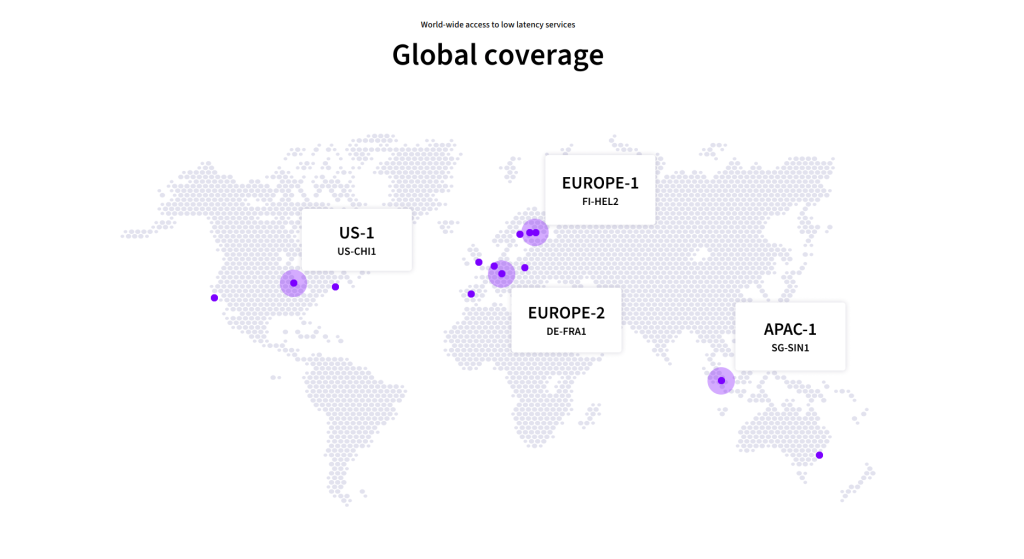
The new Managed Object Storage is available from Helsinki and Frankfurt, Singapore in AMEA, and Chicago in the US. Going forward, these four regions will serve the local data centres for all your Object Storage needs.
While provided regionally, you can easily connect your services to Managed Object Storage instances from any data centre using our SDN Private Networking. Our Private Networks offer unrestricted and secure customisable networking for connecting your global cloud resources.
As we continue to improve our infrastructure and services, the old Object Storage will be retired on February 28th, 2025. We encourage all customers to migrate to the new Managed Object Storage before this date to benefit from the enhanced features and ensure uninterrupted service.
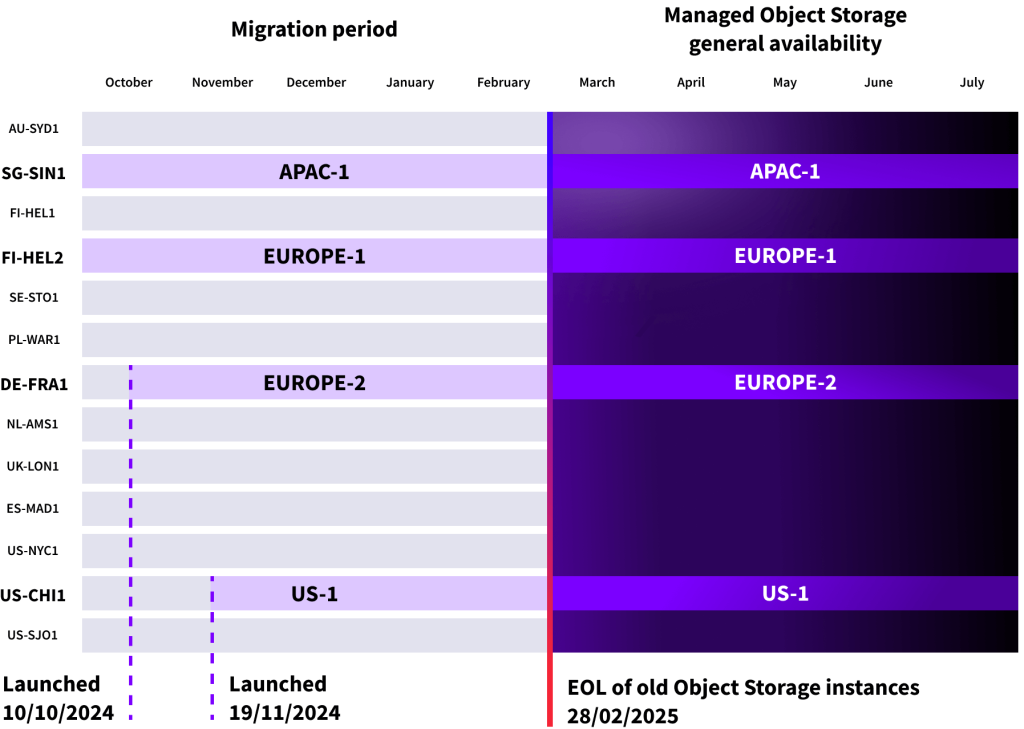
Check out our migration tool and get your data across today. We’re happy to help you take your storage to the next level with our new, more powerful Managed Object Storage solution. Our support team is available to assist you with the migration process.
Get started with Managed Object Storage today and enjoy better security, scalability, and compatibility—at an unbeatable price or learn more on the Managed Object Storage product page and documentation.