New - NVIDIA B200 & B300 Dedicated GPU Clusters | Explore GPU clusters
Experience the World’s Fastest Cloud Servers
Deploy high-performance Linux or Windows servers with full control and flexibility. Enjoy resilient infrastructure, 99.999% SLA, and simple pricing.
Our 5th Gen AMD EPYC 9575F Turin processors deliver even more speed and scalability for AI, cloud-native, and enterprise workloads.
Give your projects the power they deserve!
Samu, Senior Solutions Architect
Standout performance everywhere
Experience incredible single-core performance, delivering faster processing and enhanced efficiency for demanding applications.
Intense workloads? No problem
From analytics to media streaming and web serving, our infrastructure can handle it all.
Designed for the modern cloud
Our server plans are built for high performance, strong processing power, helping you handle everything with efficiency and ease.

No signup required
Experience High-Performance Cloud in Action
Instant access to our live demo. No signup. No commitment.
- Interactive sandbox environment
- 5th Gen AMD EPYC demo nodes
- Real-world workload examples
- Runs instantly in your browser
Versatile plans, simple pricing
Available plans
Starter
Starter plans are designed for development, testing, self-hosting, and all other cost-conscious workloads. Build your proof-of-concepts and development environments with Starter plans without worrying about down time thanks to our 99.99% SLA.
Standard storage
10 – 50 GB
Memory
1 – 16 GB
CPU
1 – 4
- 45 second deployment
- Standard performance SSD storage
- Previous-gen AMD CPUs
- IPv4 included
- 99.99% SLA
Starting from
€3/mo
Global price
| Memory | CPU cores | Bandwidth | Storage | Price |
|---|---|---|---|---|
| 1 GB | 1 | 250 Mbit/s | 10 GB | €3/mo * |
| 2 GB | 1 | 250 Mbit/s | 20 GB | €6/mo |
| 2 GB | 2 | 250 Mbit/s | 30 GB | €8/mo |
| 4 GB | 1 | 250 Mbit/s | 30 GB | €10/mo |
| 4 GB | 2 | 500 Mbit/s | 30 GB | €12/mo |
| 8 GB | 2 | 500 Mbit/s | 40 GB | €18/mo |
| 8 GB | 4 | 500 Mbit/s | 40 GB | €20/mo |
| 16 GB | 2 | 500 Mbit/s | 50 GB | €24/mo |
| 16 GB | 4 | 500 Mbit/s | 50 GB | €28/mo |
Premium
Premium plans are designed for production and business-critical workloads where performance and consistency matter most. Combining MaxIOPS storage and the latest AMD EPYC processors in a clear and simple packaging including 99.999% SLA.
MaxIOPS Storage
25 – 500 GB
Memory
1 – 512 GB
CPU Cores
1 – 80
- Transfer Included
- 99.999% SLA
- 15 global DCs
- Premium AMD CPUs
- 45 second deployment
- MaxIOPS high performance storage
- 1000 Mbps Internet & IPv4 included
Starting from
€5/mo
Global price
| Memory | CPU cores | MaxIOPS | Price |
|---|---|---|---|
| 1 GB | 1 | 25 GB | €5/mo |
| 2 GB | 1 | 25 GB | €12/mo |
| 2 GB | 2 | 50 GB | €16/mo |
| 4 GB | 2 | 50 GB | €26/mo |
| 8 GB | 2 | 100 GB | €38/mo |
| 8 GB | 4 | 100 GB | €52/mo |
| 16 GB | 2 | 150 GB | €72/mo |
| 16 GB | 4 | 150 GB | €92/mo |
| 16 GB | 8 | 200 GB | €148/mo |
| 32 GB | 4 | 200 GB | €142/mo |
| 32 GB | 8 | 300 GB | €192/mo |
| 32 GB | 16 | 300 GB | €310/mo |
| 64 GB | 8 | 300 GB | €268/mo |
| 64 GB | 16 | 300 GB | €384/mo |
| 64 GB | 32 | 400 GB | €620/mo |
| 96 GB | 24 | 400 GB | €576/mo |
| 96 GB | 48 | 400 GB | €1056/mo |
| 128 GB | 8 | 400 GB | €480/mo |
| 128 GB | 32 | 500 GB | €768/mo |
| 128 GB | 64 | 500 GB | €1248/mo |
| 192 GB | 38 | 500 GB | €1024/mo |
| 256 GB | 48 | 500 GB | €1364/mo |
| 384 GB | 64 | 500 GB | €1992/mo |
| 512 GB | 80 | 500 GB | €2552/mo |
Cloud Native
Cloud Native plans offer even greater flexibility by decoupling compute and storage to better support automated scaling while backed by our trusted 99.999% SLA.
Memory
4 – 512 GB
CPU cores
1 – 80
- 15 global DCs
- 45 second deployment
- Premium AMD CPUs
- Choice of MaxIOPS, Standard or Archive storage
- 1000 Mbps Internet
- Server stopped, no charges
- 99.999% SLA
- Transfer Included
Starting from
€12/mo
Global price
| Memory | CPU cores | Price |
|---|---|---|
| 4 GB | 1 | €12/mo |
| 4 GB | 2 | €15/mo |
| 8 GB | 1 | €20/mo |
| 8 GB | 2 | €24/mo |
| 8 GB | 4 | €32/mo |
| 16 GB | 2 | €34/mo |
| 16 GB | 4 | €68/mo |
| 16 GB | 6 | €74/mo |
| 16 GB | 8 | €80/mo |
| 24 GB | 4 | €72/mo |
| 24 GB | 6 | €78/mo |
| 24 GB | 8 | €84/mo |
| 24 GB | 12 | €90/mo |
| 32 GB | 4 | €90/mo |
| 32 GB | 8 | €130/mo |
| 32 GB | 12 | €145/mo |
| 32 GB | 16 | €160/mo |
| 48 GB | 4 | €160/mo |
| 48 GB | 8 | €190/mo |
| 48 GB | 16 | €230/mo |
| 64 GB | 8 | €220/mo |
| 64 GB | 16 | €270/mo |
| 64 GB | 20 | €285/mo |
| 64 GB | 32 | €300/mo |
| 96 GB | 8 | €240/mo |
| 96 GB | 16 | €340/mo |
| 96 GB | 20 | €380/mo |
| 128 GB | 8 | €340/mo |
| 128 GB | 16 | €370/mo |
| 128 GB | 32 | €460/mo |
| 192 GB | 16 | €560/mo |
| 192 GB | 32 | €670/mo |
| 192 GB | 64 | €700/mo |
| 256 GB | 24 | €720/mo |
| 256 GB | 32 | €740/mo |
| 256 GB | 64 | €820/mo |
| 384 GB | 32 | €880/mo |
| 384 GB | 48 | €920/mo |
| 384 GB | 64 | €980/mo |
| 512 GB | 48 | €1200/mo |
| 512 GB | 64 | €1400/mo |
| 512 GB | 80 | €1800/mo |
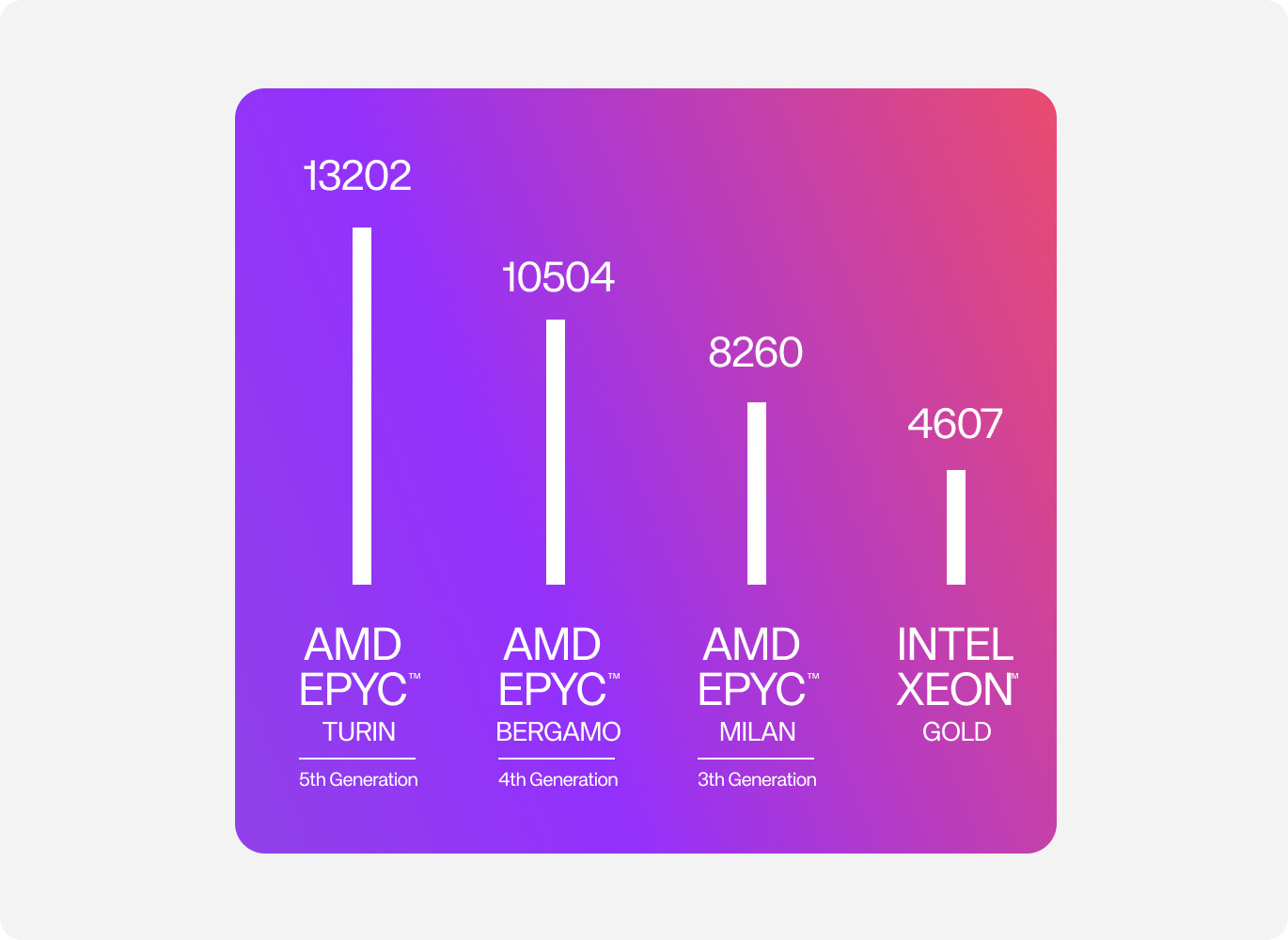
Performance benchmarking
Geekbench tests confirm that our 5th Gen AMD EPYC™ 9575F Turin Processors, configured with 2 vCPUs and 4GB RAM, deliver over 37% better performance and improved load distribution.
Automated Backups Made Simple
Keep your data safe with effortless, automated backups. Daily snapshots are included with General Purpose, High CPU, and High Memory servers, retained for 24 hours. Need more flexibility? Choose from paid options with retention periods of 7, 30, or 365 days.
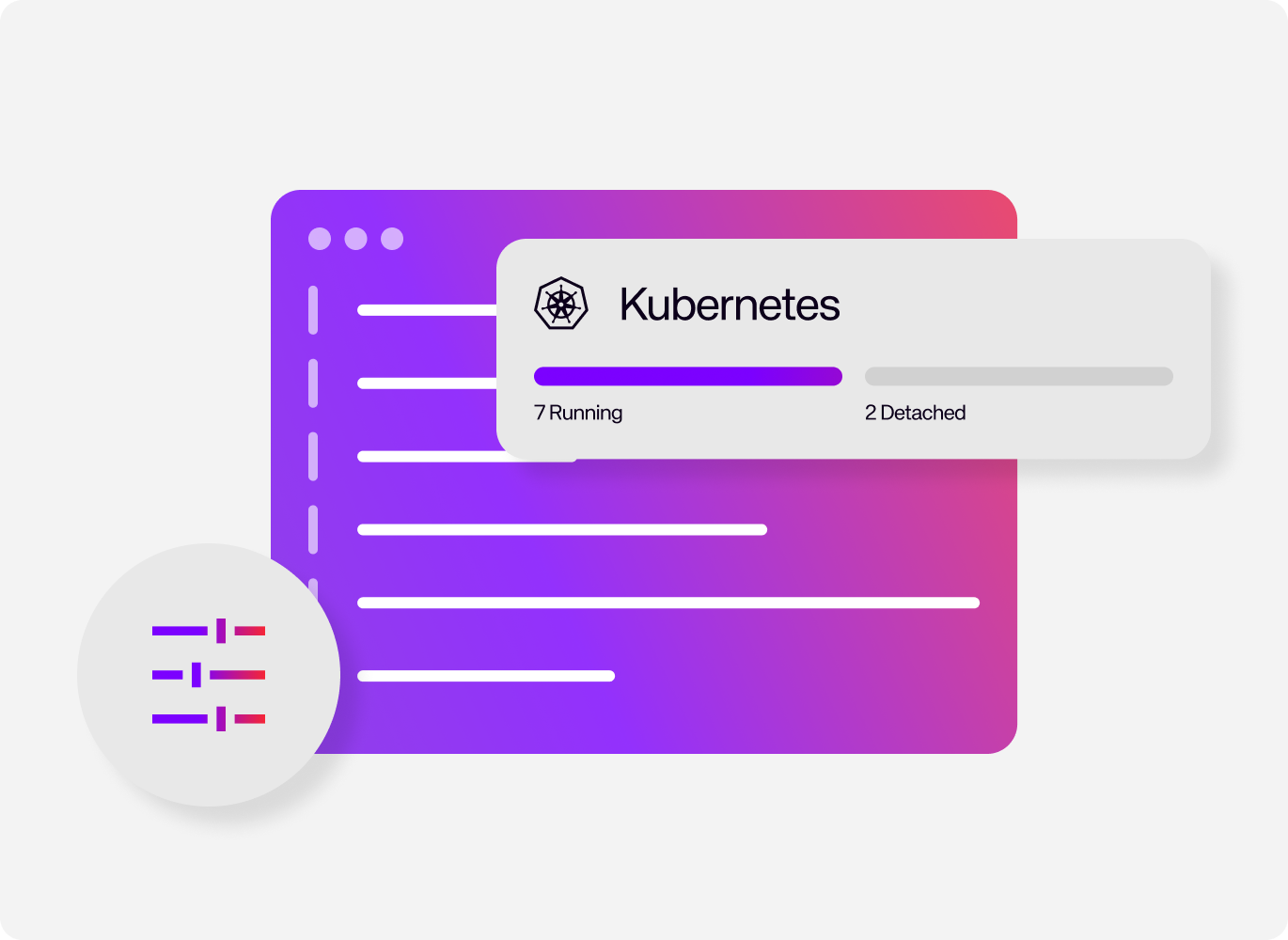
Plans designed for Kubernetes
Our plans are designed to make managing containerized workloads easier, faster, and more cost-effective. Whether you’re deploying a single application or orchestrating complex microservices, we’ve got the infrastructure to support you every step of the way.
Cloud Server plans compared
| Starter & Premium plans | Cloud Native plans | |
|---|---|---|
| ✓ Simple round € pricing ✓ Billed 24/7/365 until deleted | ✓ Pay-as-you-go, modular pricing ✓ Only billed when powered on *Storage and IPs are billed continuously due to ongoing allocation. | |
| Included: | ✓ CPU ✓ Memory ✓ Storage ✓ Public IPv4 address | ✓ CPU ✓ Memory |
| Extras: | Additional storage Additional public IPv4s | Additional storage (any storage tier) Public IPv4s |
| Use cases: | ✓ Stable workloads ✓ Vertical scaling | ✓ Fluctuating workloads ✓ Horizontal scaling ✓ Specifically designed for Kubernetes |
Cloud Server FAQ
UpCloud Cloud Servers are virtual machines built on enterprise-grade hardware and deployed across 15 global data centers. They run on 5th Gen AMD EPYC 9575F Turin processors with DDR5 RAM and UpCloud’s proprietary MaxIOPS storage technology, delivering high performance for everything from small development projects to production-grade workloads. New servers deploy in under 45 seconds and come with full root access, a built-in firewall, and private networking included.
MaxIOPS s UpCloud’s proprietary clustered storage architecture, utilizing all-flash drives with distributed data redundancy. It delivers read performance of up to 100,000 IOPS, making your application will run way faster than on standard storage solutions. Standard storage offers up to 10,000 IOPS for general use, and Archive storage is available for large, infrequently accessed datasets. You can attach up to 16 storage devices per server, up to 64 TB total.
UpCloud backs all Cloud Servers on Premium plans with a 99.999% uptime SLA, built on an N+1 redundancy principle across every component of the infrastructure. If unscheduled downtime exceeds five minutes, UpCloud provides a 50x service credit. Full details are in the UpCloud Terms of Service. Starter Cloud Server plans have a 99.99% uptime guarantee.
Cloud Servers are billed hourly and capped at a maximum of 28 days per month, keeping costs consistent regardless of how many days are in a given month. Starter and Premium plan servers are billed whether powered on or shut down. Cloud Native servers are only billed when powered on. There are no egress fees; outbound network traffic is included at zero cost under UpCloud’s Fair Transfer Policy.
Yes. You can resize a Starter and Premium plans by shutting it down and selecting a new plan from the Plan tab in the UpCloud Control Panel. Cloud Native plans support greater flexibility by decoupling compute and storage, making them particularly well suited for auto-scaling workloads. Storage devices can be added or resized independently at any time.
UpCloud offers a range of Linux distributions including Ubuntu, Debian, CentOS, AlmaLinux, and others, as well as Windows Server in Standard and Datacenter editions. You can also import a custom OS image using the Storage Import feature if your preferred distribution is not listed. Windows licences are purchased through UpCloud as a licensed Microsoft partner, and existing licences for SQL Server, Exchange, and SharePoint can be used under the Microsoft License Mobility Agreement.
Every Cloud Server supports a public IPv4 and IPv6 address, access to the Utility Network for private connectivity between your servers, a built-in configurable firewall, and support for SDN Private Networks. You can also attach Floating IPs for high-availability failover setups. All networking features, including private network transfer, are free of egress charges.
Yes. We often offer promotions for first time signups etc. To see our most up to date offers see the top of this page.
Yes. Official support is also available for Terraform and a CLI tool, making it straightforward to integrate Cloud Servers into infrastructure-as-code workflows and CI/CD pipelines. UpCloud provides a fully featured REST API that covers the complete lifecycle of Cloud Servers, including creation, configuration, storage management, networking, and deletion.
Yes. The SDN Firewall is available at no additional cost for Cloud Servers connected to SDN Private Networks. Control inbound and outbound traffic with shared rulesets that you can apply across multiple servers. Stateful filtering automatically allows return traffic for established connections, keeping rule management simple. Learn more here